Thursday, September 25, 2014

FATHER'S SECRET SAUCE AND MOTHER'S SIGNATURE DISH

20/9/2014 - 21/9/2014

I don't know about you,  but the niggling thought of the ingredients leftover  in the fridge till not sure when, really worry me.  I hate to waste them (which normally will happen if they are still not use within the week or month?) and I would be stalking blogs for recipes to use them as soon as possible.  I know, I know, my eyes are the greediest when I am shopping for food.  My brain would be telling myself,  "no, don't buy, you won't cook it" or  "no don't buy you still have some leftover" but my eyes would say "its cheap", "get some for later or just in case!"

I was glad that finally I was able to finish my stock of butter and bread flour (since the beginning of the year!) So it was no baking this weekend.  

However, I  I cooked these dishes with the items that has been on "vacation" in my fridge:-

1.
packet of the rice stick, add some fresh minced pork, fresh shitake mushroom, yellow beancurd, carrot, black fungus and preserved olive.  
  
Fried Rice Sticks with minced pork and preserved olives.
I got this inspiration from the blog of GuaiShuShu whereby he make the Ningbo Rice Sticks from scratch..... amazing. 

served with Red bean and Pulut Hitam Sweet soup.

 2. Mettwurst and cherry tomato pizza:-

small can of tomato puree mixed with olive oil, sugar, mixed herbs to form the base sauce 

a long forgotten Chilli Woodsmoked Garlic Mettwurst (German sausage) given by May and homegrown baby tomatoes from my neighbour and a small box of cheddar cheese.  

prepared the pizza dough on Saturday and left it overnight in the fridge.  
My favourite pizza dough recipe from The Pioneer Woman.   

grated cheddar cheese 

Piping hot and cheesy pizza 

Manage to get 2 delicious pizzas ... only realised later  that the sausage is a mixture of beef and pork..

3. My late Father's recipe for taucheong sauce (beanpaste sauce).

This is "the sauce"  which he used to fill inside the ducks  before they were being roasted.   One of his helpers (actually they were our family friends) would cook a big batch of this sauce and I remembered him peeling the shallots and garlic by kilos.  These were then minced including the whole beanpaste and the sauce is cooked in a BIG wok of bubbling pork fat.   Whenever the new stock was cooked, my mother would take some home. She would just  simply add sliced belimbing (sourish) and lots of lards (crispy texture)  and chillies (spicy) and we could have bowls of rice with this sauce. This simple dish was all my siblings and mine favourite. This special sauce was also used  to cook her signature dish: Braised Pork Belly with Yam.        

whole beanpaste, sour plums, garlic, shallots and sugar.
I  
I have blended the whole beanpaste with the garlic and shallots.  Pour in a non-stick pan and cook over medium/low heat till fragrant.  I used vegetable oil to saute. 

Then add the sugar to taste.  I used the brown sugar and keep stirring the mixture till it caramelise

and finally  add the secret ingredient.......lard.   

smell wonderful... adjust to taste...

Meanwhile, blanch the pork belly and drain and then prick the skin well.  Marinate with soya sauce, pepper, five spice powder and chinese cooking wine.

Slice the yam and season with five spice powder 

Prepare the seasoning: the taucheong sauce; fermented beancurd, five spice powder,  sugar, chinese cooking wine and sesame oil. Mix together and adjust to taste  


Heat oil and fry the pork belly till golden brown.. 

Also deep fry the yam so that they will not disintergrate during steaming. 

Arrange the pork and yam alternating them in a bowl.  Drizzle over the sauce.
Cover with cling wrap and steam for at least an hour over medium heat till meat is tender. 

At last, I think I have got it right this time... 

Perfect bowl of deliciousness.... 
fluffy soft yam and tender pork belly all married together with the lipsmacking sauce!  
  
Now, I think I have to get some belimbing and more lardons for my next dish. 

Enjoy your weekend. 


Wednesday, September 24, 2014

CHARCOAL FACTORY AT KUALA SEPETANG

16/9/2014

Happy Malaysia Day.

After a restful night and a good breakfast, we said our goodbyes to Ipoh and made our way to Kuala Sepetang Charcoal factory.


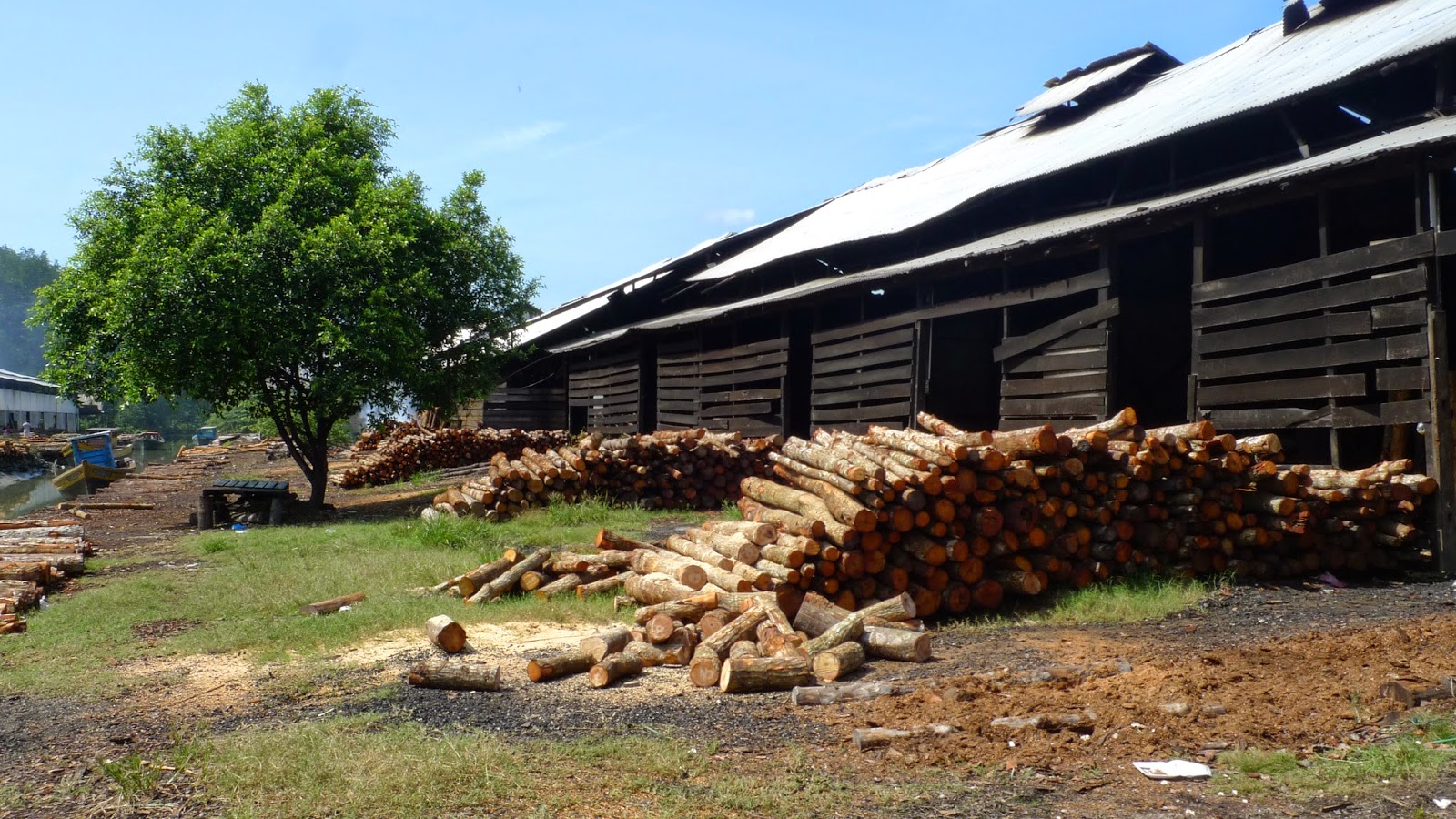
the immense factory with hardly any staff around!  Later you will know why!    
The burning smell of charcoal was prevalent but not overpowering but it soon cling onto our clothes and hair
We met Mr. Chuah, the owner who was showing and explaining to all the visitors all about the charcoal business.   

Each kiln is built manually with over 26,000 bricks and stand over 7 metres tall. 
The logs are arranged in a circle and note they are resting on top of a stone not direct onto the floor, so that they cannot get burnt. The kiln is then sealed except for the small opening for the fire. 

At the beginning,  high heat is lit to start the smoking process whereby the water content is drawn out. The logs are not burnt as I had thought so.    

this goes on for about 5 days 

Once the foreman can smell (yes it is by smelling) the dryness of the logs, the fire is immediately lessen to a small fire now.. Notice the smoke coming out from the right side opening and there is a pipe leading outside for the condensation of the vapour. 

this is where we can smell water vapour.... now what do you think it smell like.... wasabi, honey or vinegar?.

the kiln is totally sealed thereafter for 14 days.  This will allow the logs (now blackened logs (charcoal) to cool down as well as to prevent any oxygen getting in otherwise all the logs will start to burn!

Again it is manually touching and feeling the heat/coolness  of the kiln to know when the charcoals can be taken out. 

This is the 2nd generation owner of the factory... Mr. Chuah. He is holding a bottle of vinegar (the smell remember?) which is the by-product from the condensation.

So you can see the emptiness but as Mr. Chuah said, the whole  process requires a lot of close attention. 

Beside the factory is a small river. ...
This is an important transportation mode for the logs to be bought down from the forest. 

The logs are then laid out to dry and sorted into grades. The logs are cut according to government specifications: around 1.6 metres each and can only get around 3 logs per tree.  

The quality of the charcoal depends on the trees and most of his charcoal are exported to Japan.   He told us that he has a buyer for the barks too.... as a colouring additive for cheap brandy!     

 We bought some charcoal ... they are best used to absorb smells inside the fridge, shoe racks etc.  

Kuala Sepetang is a small fishing village and was formerly known as Port Weld, named after the British governor Frederick Weld.   The Port Weld Railway Station from here to Taiping was located at the centre of the town and it was the first railway in Peninsular Malaysia. It has been dismantled and only the signboard and ticketing booth remain as a coffee shop. I did saw the sign but missed taking a photo.!  

One of the many fishing and eatery shops around 

drying fish  in the sun.


We decided to stop for our lunch here.


hot water in thermos for our refill for tea.... 

the seafood porridge...... not the typical smooth and silky Cantonese porridge but  more watery more like rice mixed with seafood. 

but the seafood taste really really fresh and yummy...... 

their signature "mee- dried style" ... slightly spicy but mee was handmade and chewy.. thumbs up! This was served with another bowl of same seafood soup (minus the rice). 

After lunch, we stopped by the Matang Mangrove Forest.   There was a family of  monkeys frolicking around the parking area and we were scared that they will come after us.  So we  quickly took a  short walk of the forest before departing for KL.  


It was indeed a short enjoyable weekend.